With over 7,000 years of history, Malta is an excellent holiday destination for any history buff who wants to combine sightseeing and beaches! With temples that take you back to prehistoric times, World Heritage sites, and stunning medieval fortifications, there is always something to explore in this Mediterranean jewel!
This tiny island state has known various conquerors over the centuries. Carthaginians, Romans, Byzantines, Arabs, Normans left their mark on the archipelago of seven islands. However, those who undoubtedly determined the course of Malta from 1530 onwards were the Knights of St. John who, when expelled from Rhodes, settled in Malta, fortifying the island and repelling the Ottomans. From 1800 onwards, Malta passed into the then British Empire until 1964 when it became independent.
Malta, then, was going to be the first foreign destination we would visit in the post-quarantine era, and especially with our little one! The time has come for him to take his first air trip outside of Greece, to be filled with stimuli and images and to experience his parents' love for travel and adventures!
How will you get around?
The best way to get around the island is to rent a car. Although it may not look big on the map, the distances are significant and the sights are scattered around it. Don't be scared by the fact that they drive like the English (right-hand drive cars). Rent one with an automatic transmission so you don't have to worry about changing gears and you'll get used to it in no time. We didn't have any problems with parking anywhere. Even when there was no free parking, the parking spaces were very reasonably priced. If you don't like the option of renting a car, the network of buses It's pretty good and gets you everywhere. You'll need to be patient though.
Where to stay?
Εδώ υπάρχουν αρκετές options. Αν πας χειμώνα ή περίοδο εκτός καλοκαιριού, η πρωτεύουσα Valletta και οι περιοχές γύρω από αυτή (Sliema, Gżira) φαντάζουν ως οι πιο προφανείς επιλογές. Αν σ’ ενδιαφέρει να συνδυάσεις και τη νυχτερινή διασκέδαση, μείνε στο San Ġiljan. Αν όμως πας καλοκαίρι και θέλεις να βάλεις στο πρόγραμμά σου επίσκεψη σε παραλίες αλλά και να επισκεφτείς τα νησιά Gozo και Comino, τότε η καλύτερη λύση είναι να μείνεις στο βόρειο τμήμα του νησιού. Εμείς μείναμε στην πόλη Mellieha which is quite picturesque and quiet (just right for families) and in Pergola Hotel and Spa which we were very satisfied with. The best beaches are within a maximum distance of 10 minutes from the Mellieha.

What to see
There is so much to see and do in Malta. In our extensive research before going there, we were really impressed by the abundance of museums, attractions and activities. So with the invaluable help of the excellent Visit Malta We have put them in order and are presenting them to you in groups so that you can go prepared. Ultimately, the five days we stayed seemed too short and we recommend that you have a full week at your disposal when you go!
Valletta
You will definitely have a whole day here. The capital Valletta, the fortress city, was named after its founder, Grand Master Jean Parisot de la Valette. Construction began in 1566 with impressive ramparts, numerous forts and the cathedral and was completed in the surprisingly short time of 15 years. Its architecture is characterized by Baroque, Renaissance and Neoclassical styles, and it was officially recognized as a World Heritage Site by UNESCO.
Walking through Valletta, you will encounter an interesting historical site on every corner: medieval mansions, votive statues, niches, fountains and coats of arms on parapets and doors. Its splendor is such that in the past the nobles of Europe called it Superbissima — 'Most Splendid'. Now its narrow streets are full of tiny, picturesque shops and cafes, fashion houses, jewelry houses, etc.

St John's Co-Cathedral
Built in 1572 for the worship of the Knights of the Order of St. John, it is today one of the most popular cultural attractions in Malta. One of the most famous works of art in all of Europe is located here. Caravaggio's "Beheading of St. John the Baptist" as well as "St. Jerome" by the same. The floor of the church is decorated with tombstones under which famous knights are buried.
The temple museum houses a rich collection of Renaissance woodcarvings and copperplates, as well as lithographs by the German artist Albrecht Dürer. There are also coins, silverware, religious vestments, and even Egyptian amulets.


Grand Master's Palace
It dates back to the 16th century and was once the residence of the Grand Masters of the Knights of St. John. Today it houses the parliament and the official residence of the President. In the Armoury one can admire more than 5,000 official uniforms and armor from the 16th-18th centuries. Of particular interest is the shield of its founder Jean Parisot de la Valette (1494-1568) and the 17th-century tapestries.

Museum of the Knights of St. John– Conference center Mediterranean – Malta Experience
The Museum of the Knights Hospitaller is located within the Mediterranean Conference Center and it is particularly interesting. In this space you are transported mentally to the Crusades, the Great Siege of 1565 and learn what life was like in the times of the Knights. The most impressive element of the museum is the Knights' infirmary! This historic infirmary could accommodate up to 500 patients and was once considered one of the best hospitals in the world.
The Museum is located inside the Mediterranean Conference Center, a 16th-century building which is the flagship of the conference facilities on the island. It is also home to the Malta Experience, a half-hour audiovisual film that tells the 7000-year history of the islands.

Upper Barrakka Gardens
With unobstructed views of the grand harbor, a visit here is a must! These gardens date back to 1661 and across the street you can admire the 3 cities (Birgu or Vittoriosa, Senglea and Cospicua). If you come at the right time (12 noon and 4 pm), you will watch the traditional cannon shots that used to be fired in honor of ships arriving in the harbor. Then take the elevator down to the “Lascaris” stop where you will take a traditional Maltese gondola (dgħajsa) to go to Birgu (there is also the option of a ferry boat).


Birgu
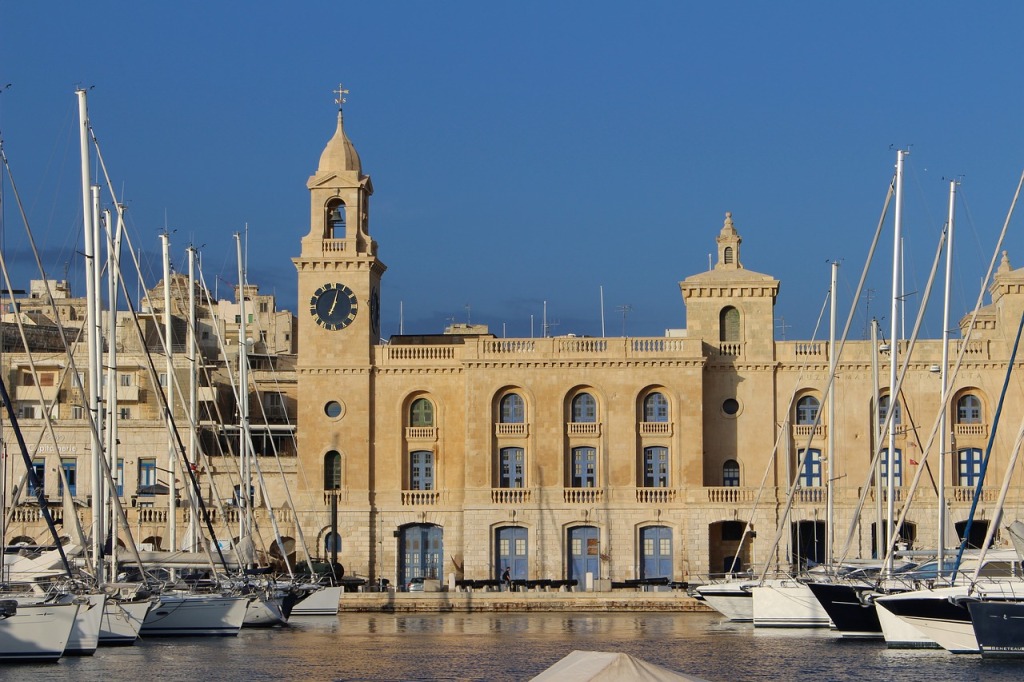
Birgu or Vittoriosa is one of the so-called “three cities” and its fortification made it a strategic city over the centuries. It is beautiful and worth walking around admiring its historical buildings which are constantly being renovated. Its picturesque narrow streets offer shade and tranquility in the morning hours while in the afternoon the waterfront is filled with people enjoying their drinks in the bars overlooking the numerous boats of the marina. Among the sights of Birgu are the fortress of St. Angelo (Fort St Angelo) and the interesting Maritime Museum.
Returning to Valletta, one notices that when dusk begins to fall, the city empties and the pace becomes more relaxed. However, this gives it another special beauty. People are transported to the steps of Santa Lucia Street for food or an aperitif and to the Valletta waterfront where huge cruise ships with thousands of lights are moored.


Southern part of Malta
Marsaxlokk
Marsaxlokk is a traditional fishing village in southeastern Malta and is a favorite destination for locals on weekends when there are open-air markets. There you will find the traditional “luzzu” boats, painted in bright colors. They have the eyes of Osiris painted or carved on them, a symbol that is said to have been brought to Malta by the Phoenicians. Osiris was a god of the ancient Egyptians and fishermen believed that he would help them avoid danger at sea.


St. Peter's Pool
Not far from Marsascala is one of the most beautiful natural pools in Malta. Tradition says that the ship of the Apostle Paul was wrecked here in 60 AD. Go early to avoid the sun and the intense heat (there is no shade, for example) and go snorkeling, sunbathing and diving from the rocks.


Blue Grotto
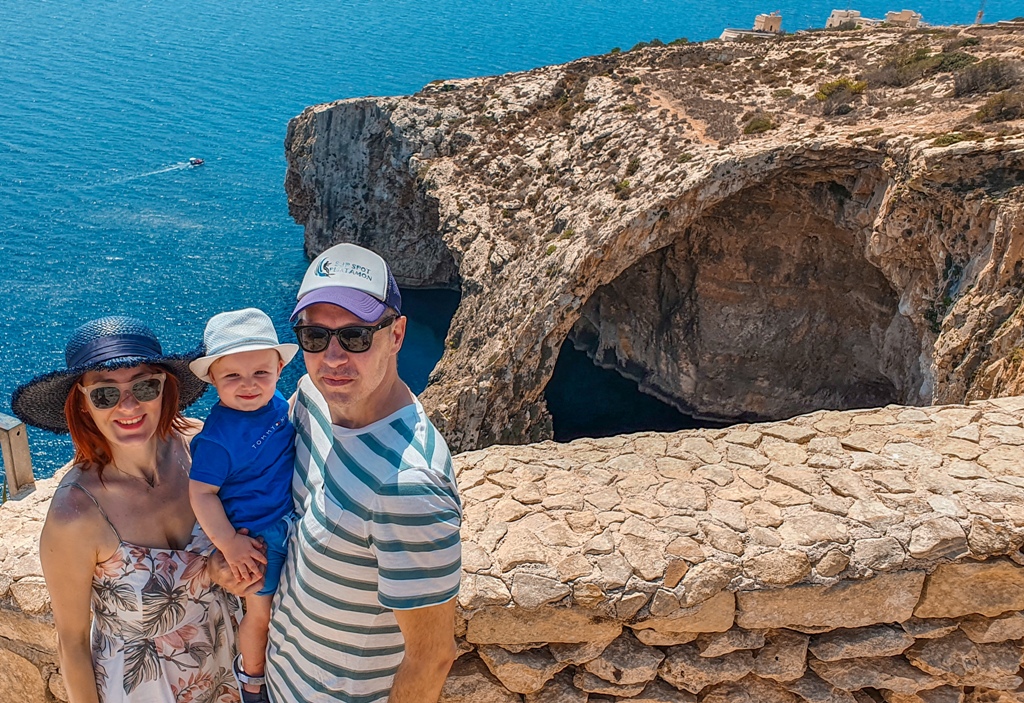
It is undoubtedly one of the most photographed spots in Malta, with hundreds of tourists visiting it every day. Over the centuries, the persistent pounding of the waves on the hard rock has resulted in the creation of a huge arched cave, as well as several neighboring caves. The sunlight and the blue of the sky are reflected on the rocky seabed below the caves, resulting in a beautiful deep blue on the surface of the water. There are two ways to see the "Blue Cave". The first is to leave the car in the parking lot of the street and go down some stairs that will bring you across from the cave and the second one is to go to the small harbor, Wied iż-Żurrieq and take the boat that, for a small fee, takes you to see the caves from the sea.

Yesgar Qim and Mnajdra Temples
Megalithic temples are not easy to come by. However, in Malta, there are a few that you should definitely visit. We consider these two to be the most impressive of the 7 on the island and they are located very close to each other. These are two places of religious worship with a history of over five thousand years, even before the pyramids of Giza! Impressive detail: During the spring and autumn equinoxes, light passes through the door of the southern temple of Mnajdra! In 1992, UNESCO recognized the Mnajdra complex and Haġar Qim as World Heritage Sites. The structure that was added a few years ago to protect the temples offers ample shade and makes the place suitable for visiting even in high temperatures.


Mdina
Mdina, or the “Silent City,” was the former capital of Malta and is perhaps our favorite city on the island. With narrow cobblestone streets shrouded in an air of mystery, Mdina snatches you from the present and transports you back in time. It’s no coincidence that much of the filming of the famous series “Game of Thrones” took place here.

Walking through it you discover an exquisite blend of baroque and medieval architecture, well-preserved churches, magnificent palaces and fortified walls that transform this silent city into an open-air museum. Only 250 residents live in it, where cars are prohibited. That is perhaps why it is called the "Silent City".

Mdina truly captures the visitor's imagination, transporting them to an era of elegance and timeless beauty! It is worth seeing during your tour the Cathedral, the old prisons, the Palazzo Vilhena (home of the Grand Master of Mdina) and the city entrance designed in the Baroque style.


St. Paul‘s Catacombs
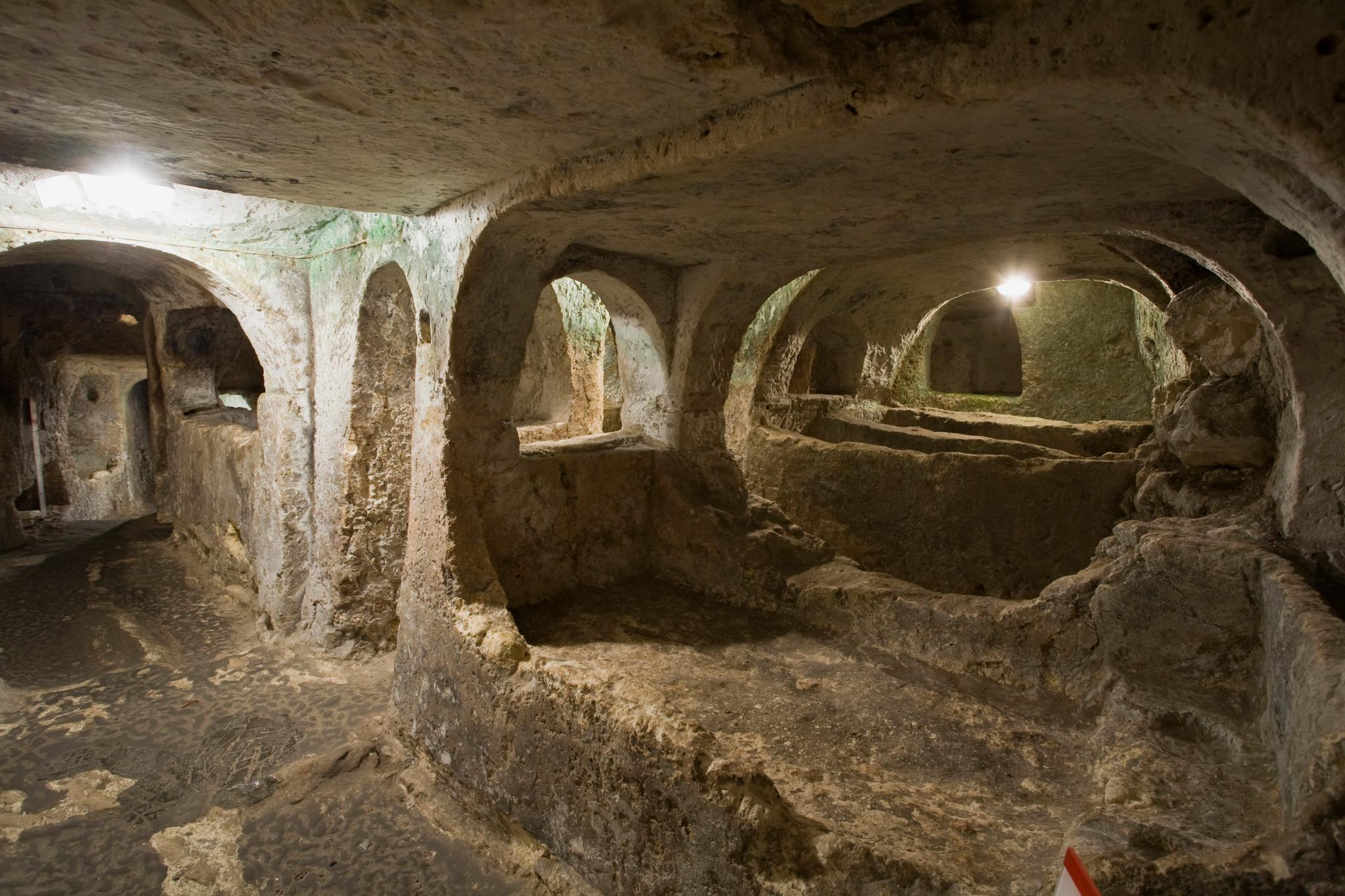
The Apostle Paul also lived in Mdina for a time when his ship was wrecked off the coast of Malta in 60 AD. His name was given to the catacombs found on the outskirts of the city, when burial was prohibited in the center of Melite (Mdina as it is known today). There you will see a network of underground cemeteries, which are by far the largest and most impressive of any burial sites found in Malta.
Northern part of Malta
Popeye village
Popeye Village is a small theme park 3 kilometers from the village of Mellieħa. It was built as a film set for the 1980 musical “Popeye” produced by Paramount Pictures and Walt Disney Productions and starring Robin Williams and Shelley Duvall. It is now open for the public as an open-air museum and seaside resort. If you visit, bring your swimsuit as there are various inflatable games for endless hours of fun, while the colors in Anchor Bay are stunning!


Mellieha
A beautiful town which has developed into a tourist resort due to the beaches that are located in close proximity to it. At the highest point you will admire the two Roman Catholic churches located a short distance from each other overlooking the natural bay of Għadira Bay. In the small square you will find beautiful cafes and restaurants while the signs will lead you to the shelters of World War II where through a short tour one can see the difficulties faced by the Maltese during that period.
Starting from Mellieħa, within a few minutes you can find yourself at the tower of St. Agatha (or red tower), a fortress that was used as a first line of defense by the Knights Hospitaller, and the interesting Malta National Aquarium in the settlement of Bugibba.


Beaches
If someone told you that Malta's beaches are not worth it, they probably didn't look far! The best ones are located here in the northern part and attract tourists with their fine sand and clear blue waters. The most beautiful ones in our opinion are Golden bay, Għajn Tuffieħa (where you will also find a surf school), Paradise bay and Little Armier bay. Keep in mind that as Malta is located in the center of the Mediterranean, it is very affected by the winds, so don't be surprised if you encounter waves on some coasts. This can result in the transport of algae or even jellyfish. For this reason, avoid August when such phenomena are more common.


But don't leave! In the article this one You will read a complete guide to Gozo, the Blue Lagoon, what is worth tasting in Malta, as well as some tips for your stay there.