When you hear the word “Tinos”, the first thing that comes to mind is undoubtedly the church of Panagia, the most famous temple in our country, which attracts the attention of pilgrims and not only. However, the island has much more to tell you and, armed with its authenticity, is waiting for you to discover it!
60 beautiful settlements, 600 dovecotes, 750 churches and chapels and countless terraces compose a unique setting full of mystery and charm. Tinos is a free lesson in folk architecture. Its Doric simplicity, the stone hardness of the landscape and the light intervention of man harmoniously combine in this wonderful place! Walking through the narrow alleys of the picturesque settlements you understand that nothing different would fit here.

Tinos means villages, culture, art! That is why the philosopher Cornelius Castoriadis called it a “handmade island”. Great Tinian artists, such as Gyzis, Lytras, Chalepas, Philippotis and Sochos found fertile ground to create.
But Tinos also means creation. People with love for their place have highlighted the island's gastronomic tradition, cleared the old paths for walkers, renovated old mansions and dovecotes, "resurrected" old vineyards and launched a new wave of tourism with respect for the island and its history.

It is undoubtedly a fairly large island (the fourth largest in the Cyclades) and you will need several days to get around it. We have selected the most important things to see and do if you only have 3-4 days at your disposal and we present them to you.
Residence
The best accommodations on Tinos are found in unexpected places, especially in its villages. Renovated old mansions, boutique suites, and stylish Airbnbs are springing up like mushrooms. However, this can make it difficult to get around as you'll be far from most beaches and Chora. We stayed in Agios Fokas, five minutes from Chora, in a wonderful accommodation and we highly recommend it to you.

What to see
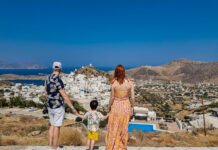
Villages, villages, villages! The more, the better! Each one has something different to offer you. Walk through their alleys and take countless photos to reminisce about winter. If you are short on time and have to choose, then the following should be your first choice:
Tower. One of the largest and most famous villages on the island with roots in the Middle Ages. Here is the Tinos School of Fine Arts that gives life to the village in winter and summer, the Marble Crafts Museum, the museum-house of Giannoulis Chalepas and the Tinian Artists Museum which are located next to each other and have a single ticket. Don't leave without trying galaktoboureko and other excellent sweets and coffee under the plane tree in Kentrikon and snacks in Atmar.


Hysternia. The view of the Aegean from here is amazing! You will visit the church of Agia Paraskevi and the Museum of Late Greek Artists. In Mayou you will go for breakfast, while for a drink at sunset you will sit at the Horizon.


Cardiani. A beautiful village that won us over from the first moment! Don't be put off by the steps, there are quite a few! Houses "embracing" each other, narrow cobblestone streets with arches above them to create a fortification for protection against raids, something common in the past. The Latin inscriptions on doors and fountains testify to the village's past. You will visit the church of Genesiou tis Theotokou or Panagia tis Kiouras and that of Agia Triada at the upper end of the settlement. To relax, enjoy a cool cocktail at Sunset bar (opens after 18:00).


Volax. Eerie round granite rocks compose a lunar setting. No one is entirely sure how they were created. A volcanic eruption perhaps, a meteorite fall? An unsolved mystery… But the village is also a feast for the eyes! On the shutters of the houses you will find verses from poems and songs! “Nobody came here until the 80s,” an old man will tell us. “And now I am glad that it has become one of the most famous places on the island,” he tells us and smiles! Drink your coffee in the traditional Coffee-yes and observed the climbers who meet in the area doing bouldering.


Baths. The name of the village testifies that in the past there were baths in the area. In the past, its inhabitants reached 500. Now, however, it is almost abandoned. It is worth seeing the Ursuline Monastery and the museum located nearby. The Ursuline nuns founded an imposing monastery in 1853 that functioned as a teaching center and a carpet-making and loom school with more than 300 students. The Jesuit Monastery, founded in 1670, is also impressive, but you will only see it from the outside because it is not open to the public.

Tarambados. Here are the most and most elaborate dovecotes. It is believed that pigeon breeding was brought to Tinos by the Venetians in the 13th century. Their breeding was particularly useful as they provided meat and fertilizer for the fields. They are usually two-story, never facing north, with the lower floor serving as storage and the upper floor for the pigeons.


These settlements that we have written about so far should be absolute musts on your visit! However, if you have extra time, it is also worth seeing Falatados, Dyo Choria, Agapi, Komi and Kambos. You will discover hidden secrets that are not in any tourist guide!

Tinos Town
As you look at Chora from the ship before it docks at the port, you realize the intense urbanization and the uncontrolled construction that has prevailed in the last twenty years. Don't despair, however, as there are small corners that still retain a certain picturesqueness. Especially at night, its alleys are bustling with life and small, elegant bars and restaurants invite you to sit down and enjoy them. Walk down Evangelistrias Street to go to the Church of the Virgin Mary. This was the old main street and is clearly more beautiful than the current one.


At the port you will find the Monument to the Elli, the cruiser that was torpedoed on August 15th by an Italian submarine in 1940. Stop by to pay your respects.

Of course, you will visit the church of Panagia. It is one of the most important religious monuments of Hellenism. It was built on the spot where the icon was found after excavations in 1823. The temple is dominated by white marble and Tinian sculptors worked on its completion. Several interesting museums operate within the complex, while one of the few authentic copies of the Rigas charter is also kept!

Beaches
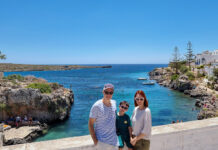
On the beaches of Tinos you will find everything you are looking for! Organized, deserted, with beach bars, without beach bars, with lounge music, alternative, everything. They are certainly not the top of the Cyclades, but they are very decent. The most beautiful in our opinion are the ones loved by the north wind! So if you want to visit them, check the forecast first. In Rohari You will be won over by his boho style. Alohari beach barIn the Swimming pool you will learn to surf on Tinos Surf Lessons taming the waves of the Aegean. On the sheltered beaches you will enjoy diving! The Saint Phocas is ideal for snorkeling (you will go to Pegu sea). In Saint John you will find the most family-friendly beach on the island, a thick sand beach with emerald waters. The same goes for LaoutiBut there are many more beaches on the island, some with more difficult access and others with easier ones that meet all requirements. You decide.


Food – Entertainment
In Tinos, wherever you sit, the food will not disappoint you. Apart from the very touristy parts of Chora, in the villages you will only find quality proposals at reasonable prices. In addition to what we wrote above, we will make a special mention of "It was a small boat.» in a beautiful courtyard in Chora, in «Marathia» in Agios Fokas, an award-winning gourmet restaurant on the seafront (a little more expensive than the others but worth it), the Croque Messier in Skalados where you can go for an excellent brunch and desserts, while in "Bread and Salt» in Falatados you will find everything creatively different.
For drinks and cocktails in Chora we liked: Santiago, the Blueberry and Bogan.
Among local products you will try gruyere, the Tinian cheese (volaki) which you will find dry or fresh, in a spherical shape. Also try local varieties of figs, artichokes, capers and macaroons, while traditional delicacies are available at the Grocery Store. Tinian Products Cooperative in Chora. Tinos had a long tradition in winemaking in the past. On the terraces, which you will see everywhere, were the old vineyards while the small scattered buildings, some of which are still preserved, are nothing more than wine presses. Tinos Vineyards of T-wine, Ballis Winery, Volacus wine and a handful of other new wineries are trying to revive this tradition. Since 2013, the island has also been exporting its own excellent beer, “Nisos” of the Cyclades Microbrewery.


Closing
Tinos is the “next big thing” of the Cyclades. If you exclude Chora, the rest of the island is unspoiled and has a clear focus on quality tourism. Private beaches, quaint villages for romantic walks, cafes under centuries-old plane trees, remarkable museums, numerous sports activities, views as far as the eye can see and a rich gastronomic tradition make up a puzzle that is difficult to find elsewhere. You will leave the island with the best memories, having had a vacation that will remain truly unforgettable!