Folegandros, a beautiful island, with its Chora on the cliff; whoever sees it once, falls in love with it, I believe
Traditional song
Every time the conversation revolves around the endless summer debate over the Aegean’s most beautiful Chora, Folegandros is consistently among the top choices—and for good reason! That’s because it’s one of those places that doesn’t need over-the-top effort to win you over. An disarmingly beautiful Chora clinging to the edge of the cliff, gleaming alleyways lined with snow-white houses and fragrant bougainvillea, the little church of Panagia as the sun sets… Everything moves to its own authentic rhythm.
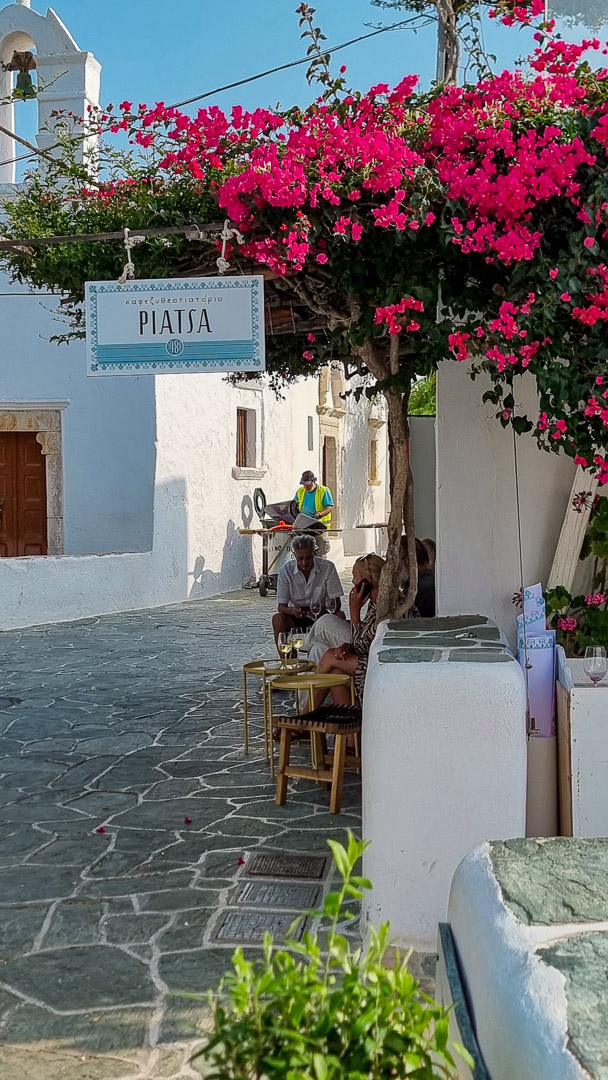
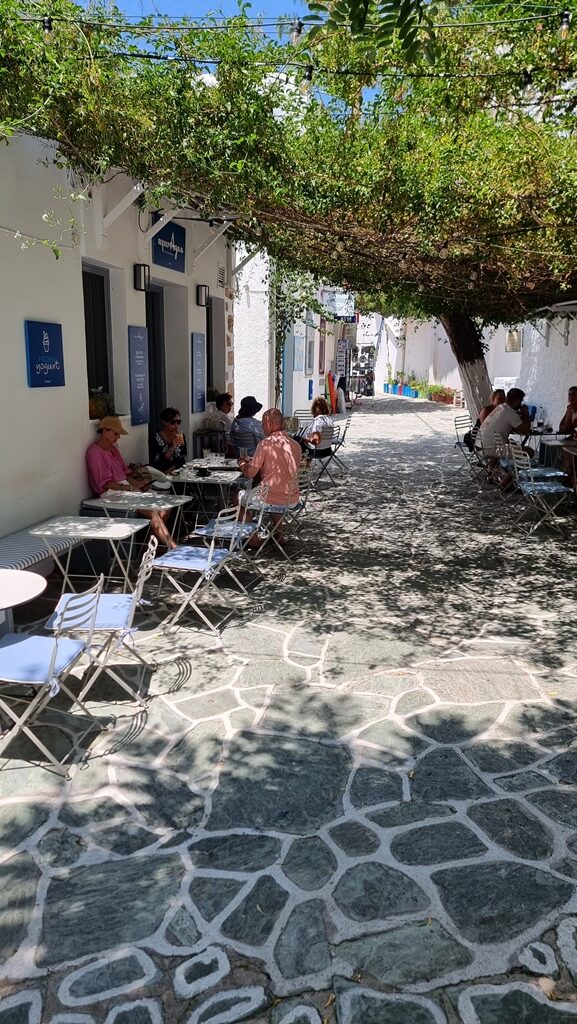
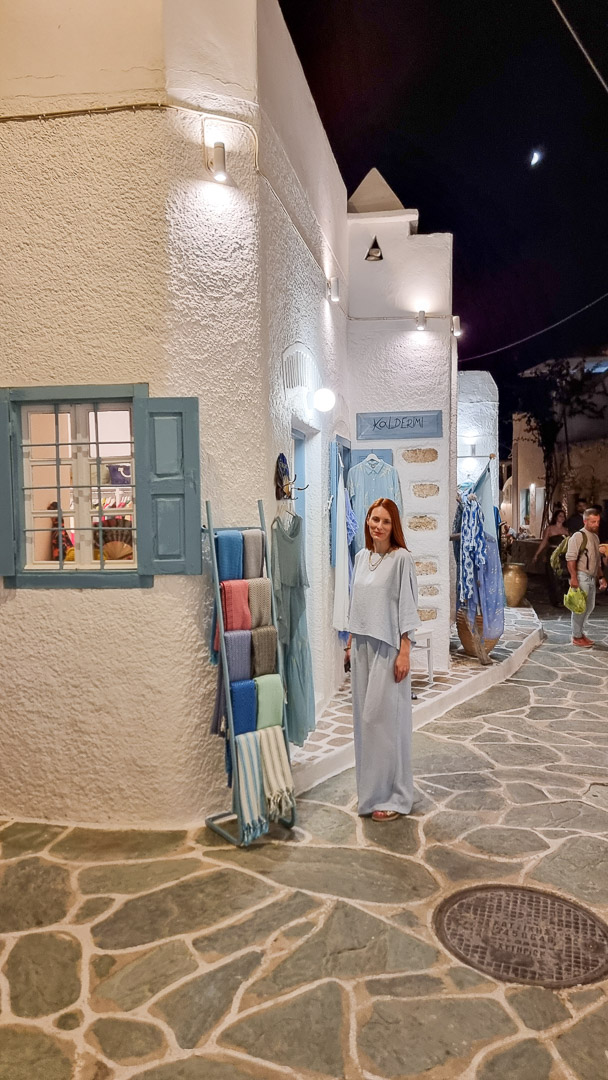
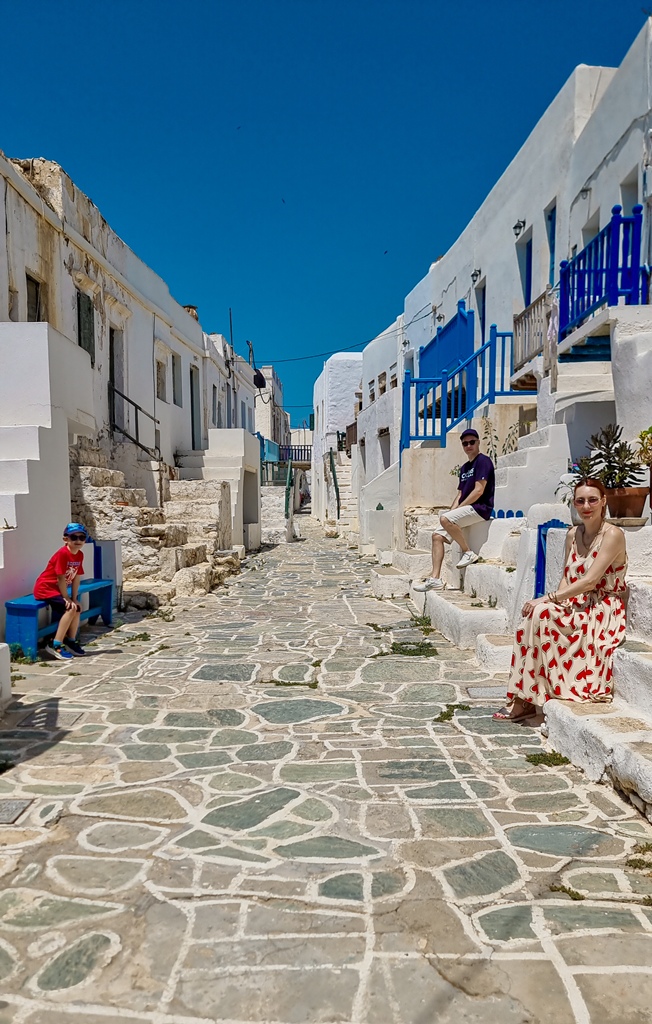 You fall in love with Chora from the very first minute you set foot there, and you won't get enough of it until you leave. Atmospheric, well-preserved, and filled with small, shaded little squares known as "piatses", each with its own distinct personality. Plus, Chora has a particularly great feature: even though it's entirely flat, cars are strictly banned! What could be more ideal?
 Did you know...
According to mythology, it took its name from Folegandros, son of King Minos of Crete, who led the first Cretans to settle there. Due to its harsh, barren, and rocky landscape, the ancient Greeks (such as the geographer Strabo) often called it "Sidera" (the iron island).
 Up until the mid-1980s, Folegandros belonged to the so-called "barren line" (remote destinations). It lacked a consistent connection to the mainland, electricity was not available everywhere, and tourism was virtually non-existent. However, this long isolation was also its blessing: it allowed the island to fully preserve its authentic architecture, customs, and the traditional agricultural way of life in Ano Meria.

What to see
Chora
It is perhaps the most atmospheric and well-preserved Chora in the Cyclades! Radiant, dazzling, and its secret? The successive squares that connect like links in a chain. Piatsa Square, Dounavi Square, Maraki Square, and Kontarini Square. Each one with its own distinct style, cafes, and tavernas beneath the trees. You will visit them again and again for coffee, food, and dessert, watching children play carefreely, tourists enjoying the shade, and locals reuniting at their favorite hangouts.
 The Castle
During the Middle Ages, Folegandros suffered continuously from pirate raids. In 1212, the Venetian Duke Marco Sanudo captured the island and built the Kastro of Chora to protect the population. It was designed in such a way that the outer walls of the houses effectively formed a defensive wall. In fact, for centuries, building high houses outside the Kastro—or having them visible from the sea—was forbidden so as not to draw the attention of pirates.

In essence, it is a neighborhood you enter through a covered passage called "Megalo Skiadi" or through the Loggia. You will walk along the photogenic Kato Roua and lose yourself in the narrow lane of Piso Roua beneath small arches and covered passages. Here, the houses are built wall-to-wall, bathed in the gleaming white Cycladic light, with colorful window frames and flowers adorning the small verandas and courtyards.
 Pounta square
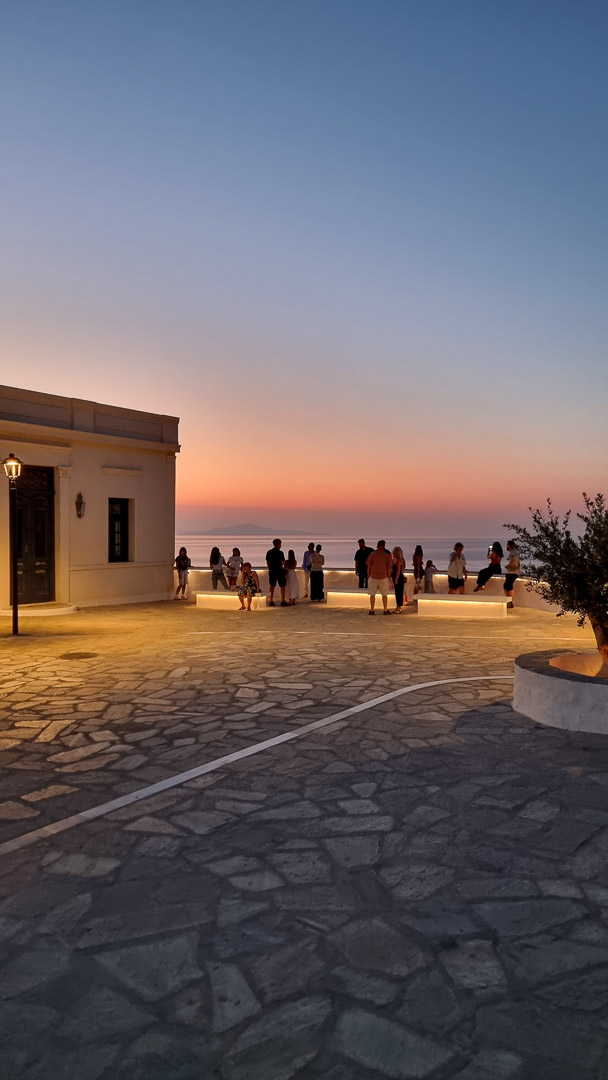
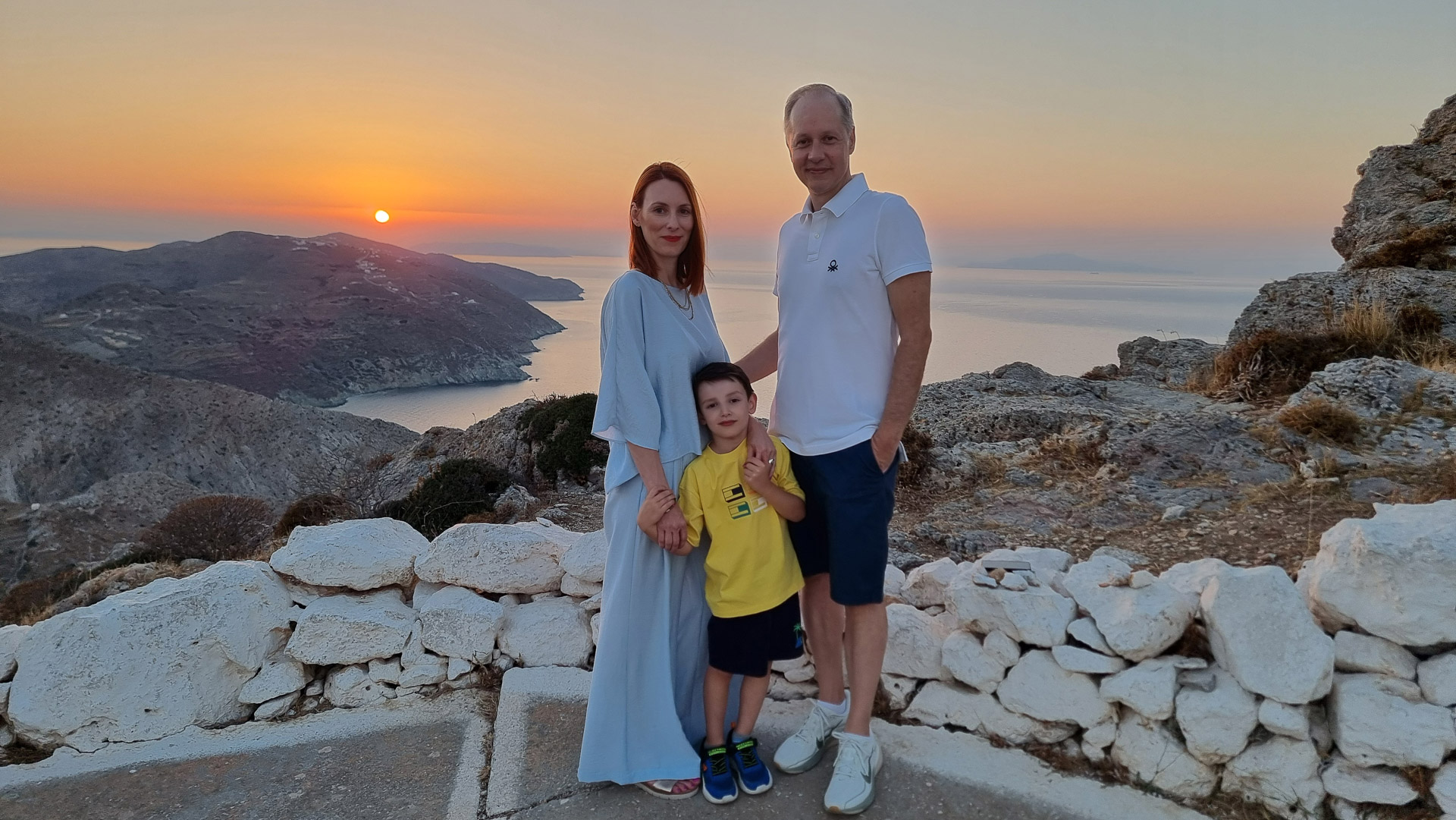
The view it offers, sitting literally right on the edge of the cliff, is breathtaking! The best time to experience it is sunset, when the colors of dusk paint the horizon. The primary school, housed in an imposing 20th-century neoclassical building, transports you to another era.

The Church of Panagia (Virgin Mary)
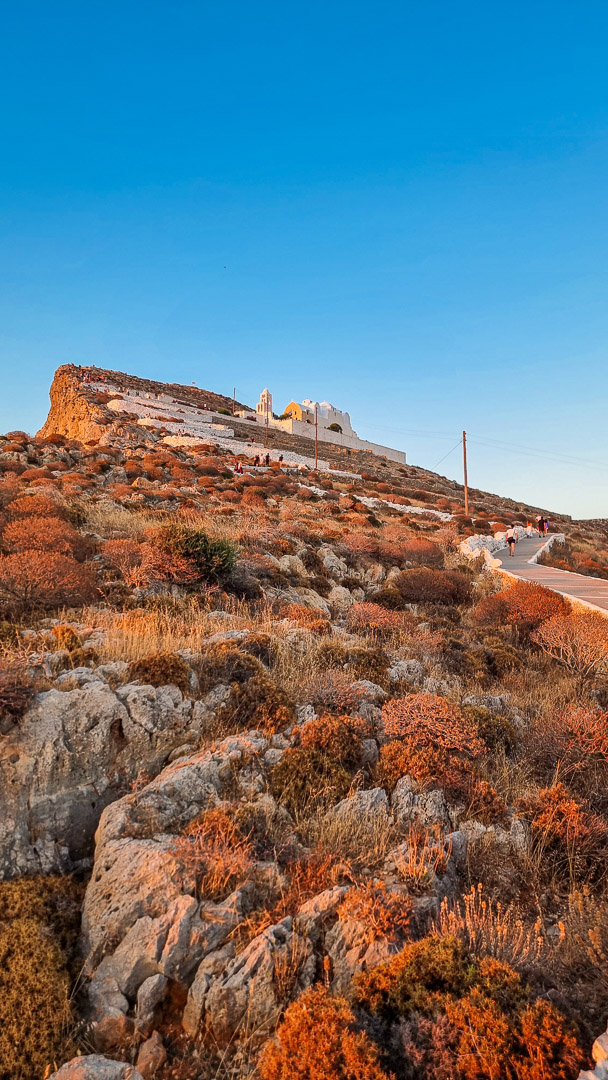
It is the ultimate highlight of the island. The stone-paved, winding path leads you from Pounta Square to the finest spot to watch the island's most breathtaking sunset. The walk up takes about 15 minutes, but the experience as the sun goes down is pure magic.
 And once you've made it all the way up here, step inside the largest church on the island! It is built on the site of an ancient temple (most likely dedicated to Artemis or Apollo). Embedded within its courtyard and interior, you'll find ancient marble fragments, inscriptions, and statue bases. The church was originally built in 1687, taking its present form following a reconstruction between 1816 and 1821.

Ano Meria
Here, time has stood still. If you truly want to see what the Cyclades were like decades ago, head out toward Ano Meria. In this rural settlement, you won't find narrow houses and arches, but standalone *themonies* (traditional farmsteads) where each home keeps its own vegetable garden to provide the essentials, just like in the old days. Highlights of the settlement include the Folklore Museum (open 17:00–20:00), as well as traditional grocery stores and tavernas serving local flavors and products.

Beaches
Folegandros isn't the kind of island with endless beaches where you don't even know which one to pick first. Besides, that's not why you come to the island in the first place. They are beautiful, though, and concentrated in two main areas, so you can easily reach them either by car or by taking the local bus.
 Agkali: A wind-sheltered, easily accessible sandy beach ideal for families. Right next to it lies Varela Cove, which you can even cross to on foot if the sea allows (a fantastic spot for snorkeling!). From Agkali, small traditional boats depart for Galyfos, Agios Nikolaos, as well as the secluded beach of Livadaki, where if you catch calm seas, the waters look just like a swimming pool.

Livadi: A quiet beach with sand and pebbles that stays sheltered when south winds blow. Since there are rocks as soon as you step into the sea, set up toward the right side, where entry is much easier.
Karavostasis (Chochlidia Beach): Right next to the island's port, you'll find a pebble beach with tamarisk trees for shade. It might not blow you away, which is why we recommend taking the excursion boat from there to visit the island's most famous beach…
Katergo: Crystal-clear waters, impressive cliffs, and a rugged landscape that lets you feel the unique character of this barren side of the Aegean. Tip: Be sure to bring along water and an umbrella for shade.

Gastronomy
The gastronomic identity of Folegandros is simple, pure, and delicious. Don't leave without sampling:
 Matsata: The famous handmade local pasta, served with slow-cooked rooster, beef, or goat in a rich tomato sauce.
Souroto & Sourotenia: Souroto is the local soft, slightly tangy goat cheese. Sourotenia is the traditional pie that enfolds this cheese between thick, handmade layers of pastry.
Karpouzenia(or Melenia): The unique traditional sweet pie made with watermelon, honey, and sesame seeds.
Avgolalia: something between a savory pie and an omelet
Local beer: It's called Katsika and is the perfect pairing to accompany your meals.
In general, dining in Folegandros is one of the island's strong suits. As a starting point, some of the places we recommend in Chora for food and drinks are: Barbounaki for fresh seafood, Asygkrito for home-cooked dishes, Grilia for street food, Loggia for breakfast, Kyklos for drinks and cocktails, ΠαρασAgas ...for ice cream, while if you want an atmospheric drink at sunset, make a reservation at the hotel Anemomilos.

In Ano Meria, even if you don't eat there, it's worth visiting Irene's grocery-restaurant and sampling delicacies and handmade sweets at the cottage workshop "Grandma's Kitchen" (*I Kouzina tis Giagias*) (open 9:00 AM–4:00 PM & 6:00 PM–11:00 PM).
 Travel See Feel Tips & Logistics
Do you need a car? Not necessarily! Folegandros is small and extremely easy to navigate. The local bus service runs very frequent routes, taking you comfortably to Chora, Ano Meria, and the three main accessible beaches (Karavostasis, Agali, and Livadi). From those spots, you can easily catch the local excursion boats to reach the more secluded beaches!
 Where to stay?
As for accommodation, if you are traveling with a child, it is well worth choosing a property with a pool. Since the island doesn't have an abundance of easily accessible beaches for young children, a pool offers the perfect alternative for endless play and relaxation at any time of day. Prefer staying in Chora, so you have everything at your fingertips without needing a car for your evening outings! A value-for-money option we recommend is this, while if you are looking for a more premium accommodation experience, take a look at here.
 Closing
Leaving Folegandros, you realize why everyone who visits keeps coming back. It’s not just another island… it’s an ethereal, picture-perfect place that forces you to slow down, gaze at the horizon from the cliffs of Chora, and experience authentic Greek hospitality.
We left the island filled with that sense of effortless summer freedom, the image of white against the endless blue indelibly etched in our minds. Folegandros doesn't just steal your heart with its beauty; it reminds you what it feels like to experience the Greek summer in its purest, most authentic, and magical form.